Sake is a popular alcoholic beverage made from fermented rice, water, yeast and koji. Its brewing practices have significantly evolved since its ancient origins, helping producers create larger and more consistent batches.
Learn more about traditional sake brewing techniques and how modern technologies revolutionize the production process.
The Art of Traditional Sake Brewing
Sake’s history in Japan dates back to around 300 B.C., and it is still among the most popular alcoholic beverages in the country today.
The traditional sake brewing process involves the following steps:
- Rice polishing: Polishing helps remove the outer layers of the rice to expose the starchy core. The polishing ratio contributes to the sake grade and flavor profile.
- Rice washing: Cleaning the polished rice helps remove unwanted impurities and bran to support clean fermentation and combat unwanted flavors.
- Rice soaking: This step helps the rice absorb the optimal amount of water for proper steaming in the next phase.
- Rice steaming: Brewers cook the rice to be firm on the outside and soft on the inside, which creates the ideal conditions for koji growth and fermentation. Koji is a type of mold used to decompose starch into sugar.
- Koji cultivation: Koji is initially sprinkled on a portion of the steamed rice, cultivating the mold growth and converting rice starch into fermentable sugars.
- Yeast starter: This phase involves creating a concentrated yeast culture to support a heavy fermentation foundation.
- Main mash: Main mash, known as moromi, involves conducting the primary fermentation to convert the sugars into alcohol and develop the sake’s flavor profile. The koji rice from Step 5 is mixed with the remaining steamed rice, initiating what is known as multi-parallel fermentation.
- Pressing: The liquid sake is separated from the solid rice.
- Filtration: The filtration process enables brewers to remove fine particles, adjusting the sake’s clarity and achieving the desired flavor.
- Pasteurization: This step helps kill unwanted bacterial growth and stabilizes the sake to support better shelf life.
- Aging: Aging helps sake develop more balanced and refined taste profiles.
- Bottling and distribution: Brewers can adjust the final alcohol content and bottle the sake for consumption.
In traditional brewing, these phases rely heavily on natural processes, human observation and manual control. Many steps, such as rice polishing, were originally performed by hand, involving physically demanding and labor-intensive processes.
During the Japanese Industrial Revolution from 1868 to 1912, sake breweries began implementing slightly more automated machinery into production processes. The sake brewing evolution helped reduce manual labor demands and make brewing larger-scale batches possible.
Modern Sake Production and Brewing
Today’s sake production practices follow the same basic steps as traditional brewing, empowered through several modern solutions. Breweries are using advanced sake brewing technology and equipment to support quality control and bigger, more consistent batches.
Digitalization in sake brewing is transforming the production process with the following technologies:
- Internet of Things (IoT): Smart breweries are using advanced sensors and IoT networks to carefully monitor and track temperatures, humidity and fermentation data throughout the brewing procedure.
- Biotechnology: Advancements in biotechnology allow brewers to experiment with different yeast strains and rice varieties to achieve unique flavors.
- Artificial intelligence (AI): AI analysis can be used to assess fermentation progress and ensure optimal brewing conditions.
Data-driven insights help brewers gain greater insight and control over every phase of brewing. Automation also reduces manual labor demands and supports faster brewing without compromising quality. Automated systems for rice polishing, koji cultivation, pressing and fermentation help breweries achieve precision and consistency.
High-tech production enables producers to diversify their offerings, creating sake with unique taste profiles, sparkling varieties and low-alcohol options. In addition to digital solutions, advanced equipment is also transforming modern sake production.
Advanced temperature control systems, pasteurization equipment, filtration solutions and koji incubators all contribute to a highly controlled and efficient brewing process. Modern sake brewing solutions also allow for streamlined bottling to support large-scale production and optimized storage for better shelf life and longevity.
Key Differences Between Modern vs. Traditional Sake Brewing
Many factors influence the taste and quality of the final product. The following are some of the primary differences between traditional and nontraditional sake brewing processes:
- Lactic acid: Traditional sake brewing techniques involve naturally occurring lactic acid bacteria for the fermentation process. Many modern practices involve adding extra lactic acid during brewing.
- Control: Today’s sake-brewing processes feature greater control at every stage of production, from rice polishing to water treatment to environmental conditions. Traditional techniques relied largely on natural processes and human observation.
- Fermentation: Classic sake brewing involves longer fermentation periods and a more time-consuming production process. Modern fermentation techniques emphasize efficiency and take less time to complete.
- Flavors: Traditional sake is often characterized as having a richer, more complex flavor with earthier tones and higher acidity from the natural yeast and lactic acid development. Modern brewing practices with cultured yeasts and additional lactic acids typically create a lighter-bodied, cleaner and more refined flavor.
The Hybrid Approach to Sake Brewing
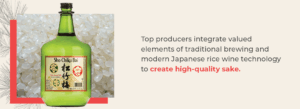
Top producers, like Takara Sake USA, integrate valued elements of traditional brewing and modern Japanese rice wine technology to create high-quality sake.
By embracing sake’s ancient heritage through traditional craftsmanship and stepping into the future by using advanced equipment and tech systems, breweries can achieve efficiency while maintaining classic sake flavors.
Some of the traditional elements of sake brewing that modern breweries can embrace include handcrafted koji production and natural fermentation processes. These, paired with modern enhancements and digital technologies, can supercharge production and offer the following advantages:
- Digital monitoring of traditional processes
- Enhanced safety and sanitation
- Improved consistency
- Greater production efficiency
The Future of Sake in America
While rooted in Japanese culture, American-made sake is a growing market. In fact, in 2022, the United States had the highest volume and second-highest value of sake exports.
More Americans are enjoying craft sake and experimenting with different varieties. The growing demand can be attributed to a growing number of United States-based breweries, growing interest in Japanese culture and a shifting consumer trend toward lighter alcoholic beverages.
At Takara Sake USA, we embrace American ingredients, such as snow melt from the Sierra Nevada Mountains and rice grown in California’s Sacramento Valley, to create the most delicious and high-quality products.
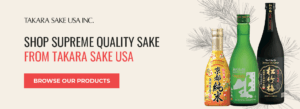
Shop Supreme Quality Sake From Takara Sake USA
As the leading seller and producer of domestic and imported sake in America, Takara Sake USA is your go-to source for delicious sake products. Our team marries the art of traditional craftsmanship, modern technologies and locally sourced ingredients from California.
Since 1983, we’ve developed and mastered our brewing techniques. We offer a wide range of products, including various types of sake, plum, mirin, shochu and J POP.
Are you ready to embrace Japanese culture with supreme quality sake? Browse the range of products from Takara Sake USA online and place your order today!